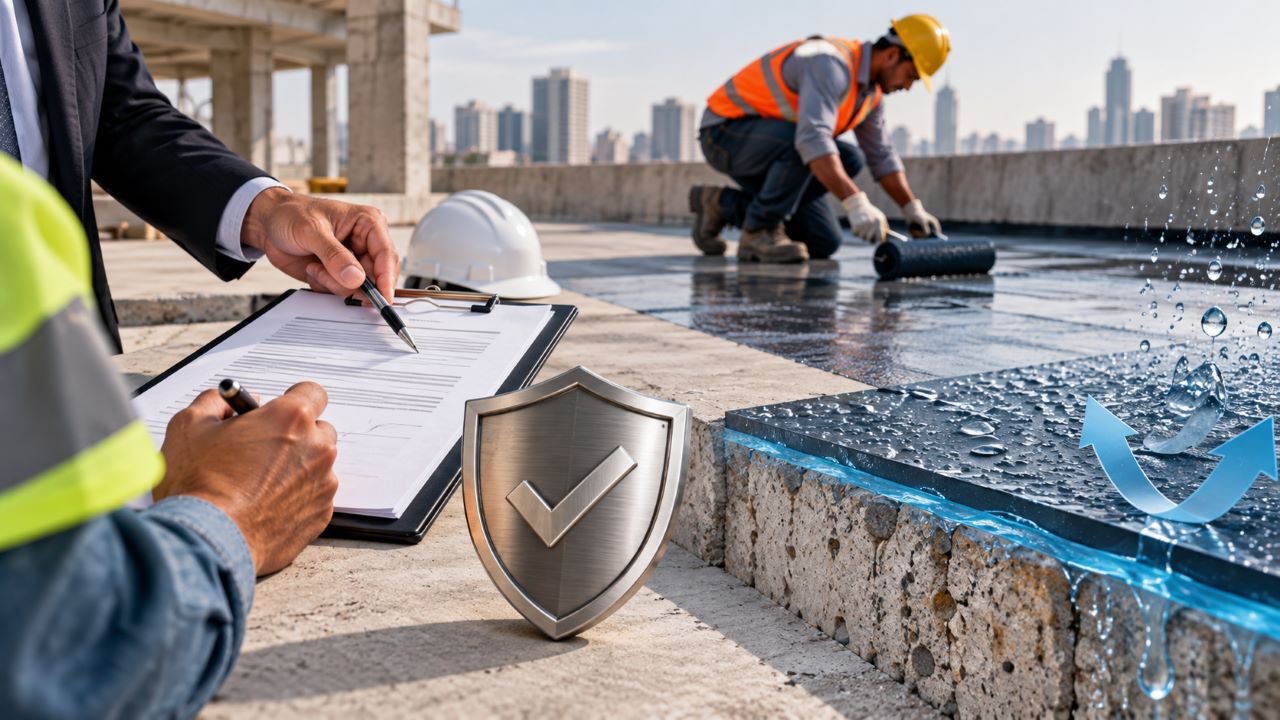
When investing in waterproofing solutions, property owners often place heavy reliance on long-term warranty guarantees. However, understanding what a warranty actually covers—and separating marketing promises from contractual realities—is vital to ensuring permanent protection against water ingress
A warranty is only as reliable as the quality of the materials used, the precision of the surface preparation, and the reputation of the executing contractor
Part 1: Common Myths vs. Realities in Waterproofing Warranties
Property owners frequently encounter misunderstandings regarding what guarantees actually protect:
Myth 1: “A 20-Year Warranty Means Zero Leaks Guaranteed”
Reality: Most long-term warranties only cover material defects, not workmanship flaws or structural movement that causes cracks. If the application protocol fails, the warranty may be void
Myth 2: “All Waterproofing Products Are Covered Equally”
Reality: Basic single-layer coatings degrade rapidly under severe hydrostatic pressure or thermal expansion, whereas integrated multi-layered chemical systems maintain long-term integrity
Myth 3: “Interior Patchwork Carries the Same Guarantee as Exterior Work”
Reality: Negative side (interior) waterproofing acts as a temporary band-aid against water pressure, meaning warranties on interior repairs often carry strict limitations compared to positive side solutions
Part 2: What to Look for in a Real, Reliable Warranty
To ensure true peace of mind, property owners must verify specific contractual elements:
1. Coverage of Both Materials and Workmanship
A dependable warranty covers both the chemical products used (such as PU liquid membranes or crystalline slurries) and the expert execution steps like surface grinding and joint detailing
2. Proactive Positive-Side Standards
Warranties backed by exterior positive-side applications offer significantly higher reliability because they stop water at the source before it breaches the concrete matrix
3. Rigorous Testing & Quality Compliance
Trustworthy contractors validate their work with strict protocols, such as 48-hour water ponding tests, ensuring the structure is completely secure before handing over guarantees
Summary: Don’t let a long number on paper replace proper engineering execution. True
waterproofing security comes from superior materials, correct application, and transparent warranties.